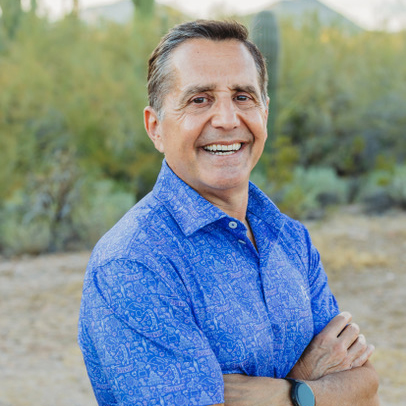
Greg Scaven ’85
If you asked Greg Scaven ’85 what he wanted to be in fifth grade, he would have told you: a chemical engineer. Not the typical answer from a 10-year-old, but Scaven had already done his research at the school library.
That answer never changed. In high school, he toured engineering programs around Philadelphia. The father of the girl he was dating, who happened to be a Lafayette grad, told Scaven that he seemed “like a Lehigh guy.”
The jab turned out to be good advice. One visit to South Mountain and Scaven was sold on the campus, curriculum, and people. Then came the hard part. Affording the Lehigh experience wouldn’t be easy, but Scaven told his parents he would figure it out. He did: a full Army ROTC scholarship.
“ROTC was without a doubt the difference between me attending Lehigh or going somewhere else,” he says.
That decision shaped his education, career, and the legacy he is building at Lehigh through his leadership and philanthropy.
Lehigh Days
At Lehigh, Scaven learned to lead by building teams. In his engineering courses, classmates pooled what they knew to solve problems. In ROTC, cadets trained and completed field exercises as a unit. At Lambda Chi Alpha, he served as academic chair, helping his brothers build study plans and raise their grades.
“Back then, just like the interdisciplinary Lehigh of today, we worked together to solve common problems,” he says. “It always felt like failure wasn’t an option.”
An Officer and Engineer
Commissioned as an Army Chemical Corps officer, Scaven managed the research, development, testing, and fielding of new equipment. His first assignment was to earn a master’s in chemical engineering at the University of Pennsylvania.
“The Army wanted officers to be experts in technology and proficient in their technical duties,” he says.
He then served with the 2nd Infantry Division along the demilitarized zone in Korea before returning stateside to advance chemical research and development. In the late 1980s and early 1990s, as the United States worked to close a gap with Russian advances in the field, he took on flame and incendiary weapons. His formal introduction to pyrotechnics came at the Summer Pyrotechnics Seminar at Washington College, studying under Dr. John Conkling, author of the field’s seminal textbook, Chemistry of Pyrotechnics.
In February 1991, during Operation Desert Storm, Scaven deployed to the Middle East, where he assisted troops to test air, water, and soil for chemical and biological agents. Those tools went into vehicles the U.S. took into the field to protect ground troops.
He left active duty as a captain in September 1991 and served in the Army Reserve until 1998. His decorations include the Meritorious Service Medal, the Southwest Asia Service Medal with one Bronze Star, the Army Commendation Medal, the Overseas Service Ribbon, and four awards of the Army Achievement Medal.
A Career Built on Safety
Scaven spent the next three decades applying pyrotechnics to defense, aerospace, automotive, and energy markets, serving positions as director, vice president, and, eventually, president.
“Most people hear the word pyrotechnics and think we just make things go boom,” he says. “But our job is to prevent catastrophe. We have an obligation to keep people safe. The systems we design have to work when needed, no matter the circumstances or environmental extremes.”
At Simula Automotive Safety Devices, Scaven led the engineering teams, and eventually the business, that brought the first side-impact head-protection airbag to market. The system debuted as standard equipment on BMW’s 1998 7 Series and 5 Series in 1997, the first production cars with airbags that protected occupants’ heads in side-impact crashes. The technology helped shape the federal safety standards for head protection and set the direction for the airbags that are now standard equipment in all vehicles and have saved countless lives.
Scaven’s work also took orbit. As president of Pacific Scientific Energetic Materials Company, the company’s pyrotechnic components (more than 100 of them) helped get the Space Shuttle into orbit and safely back to Earth, including hydrogen burn-off igniters and separation nuts.
It is a connection he shares with Lehigh’s own Terry Hart ’68, the former NASA astronaut who flew aboard Challenger in 1984 and still fondly recalls those separation nuts that kept the Shuttle tethered to the earth before launch.
Time and Service
Scaven has kept Lehigh in his sights.
He has taught capstone courses as an adjunct professor, lectured on the ethics of pyrotechnics, and talked with students about their career paths. He serves on the Dean’s Advisory Council for the P.C. Rossin College of Engineering and Applied Science.
“I felt supported at Lehigh as a student, and I want to offer that same support to anyone in the Lehigh community who is willing to ask,” he says.
Beyond time, Scaven created an endowed scholarship that gives preference to need-based students from the Four Corners states of Arizona, Colorado, New Mexico, and Utah. The West has been Scaven’s adopted home for 35 years, and over his career he has led many talented engineers from the region who had never heard of Lehigh. He wants that to change.
It also gives preference to students with a connection to the armed forces. That is not a requirement to serve. It reflects what service gave him.
“Military service was part of my overall education, it helped me afford Lehigh and succeed in the civilian world,” he says.
A Legacy That Keeps Growing
Scaven has also included Lehigh in his estate plans. His bequest will continue to grow the scholarship long after his own career is done, so it can help more students over time.
“My hope is that someone falls in love with Lehigh during a campus visit, just like I did, and this scholarship either bridges the financial gap or covers it completely so they can attend,” he says. “I want those students to know there are alumni who care enough to give back, and that the foundation Lehigh gives them can lead to great success of their own. Someday, I hope they’ll pay it forward too.”